
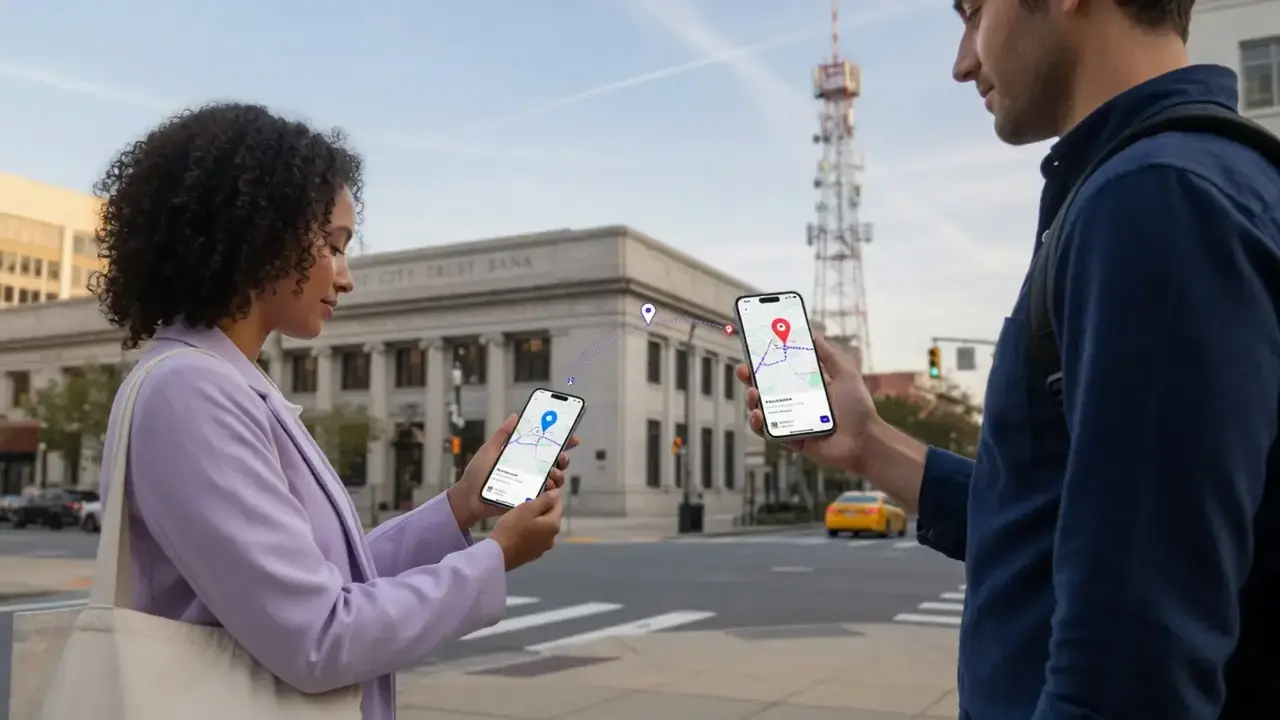
Infrastructure stories in fintech often skip the boring sentence that determines everything: who holds the money. Platforms that match riders and drivers do not garage every car. Platforms that match guests and hosts do not own every flat. Liquidity marketplaces should be equally clear. If they coordinate people, say so. If they hold balances, say so—and show the licence.
CaQeh’s stated model is a technology marketplace connecting users seeking liquidity with users able to provide it, with payments executed through licensed mobile money, banks, cards, or other authorised services. CaQeh does not take custody of customer funds. The rest of this article explains why that design choice matters for risk, regulation literacy, and product trust. It is not legal advice and does not assert licences beyond what CaQeh’s own documentation states.
Supply, demand, and the matching job
On one side: people who need cash, need a digital payment completed, or need a specific method at a specific time. On the other: people who can provide that form of value and are willing to coordinate. The platform’s core job is discovery, preference expression, communication, and status—similar to other two-sided markets—plus strong clarity about what happens off-platform on licensed rails.
Good matching reduces search costs. It does not erase counterparty risk. Users still decide whom to meet, which provider to pay through, and whether a deal makes sense. Platforms that hide that residual risk behind absolute language train users poorly.
Why non-custody changes the product surface
When a platform does not hold funds, it should not present balances that look like deposits, should not promise interest on “float,” and should not describe itself as safer than banks by virtue of software alone. What it can do is improve information quality: location, availability windows, method preferences, and educational guidance on using licensed channels carefully.
When a platform does hold funds, an entirely different stack appears: safeguarding, audits, capital, disclosures, and supervisory relationships. Pretending a pure marketplace is that stack—or the reverse—creates both regulatory and user-trust failures.
Interfaces to licensed rails
Users already trust certain brands for settlement: their mobile-money provider, their bank, their card issuer. A marketplace that respects those relationships treats rails as external systems of record. Integration may be deep or shallow depending on product phase, but narrative honesty stays constant: the provider processes the payment; the marketplace coordinated the match.
For CaQeh-specific wording on this split, use the primary sources on-site: About, FAQ, and the legal pages for Terms and Privacy. Marketing articles should not invent partnerships, volumes, or certifications.
Design principles for credible liquidity platforms
- Plain custody language in every surface that mentions money.
- Method and location as first-class match fields, not afterthoughts.
- Dispute routing that sends payment issues to the rail and marketplace issues to the platform.
- No fabricated social proof—no invented user counts or guaranteed success rates.
- Educational tone on regulation: general information, not jurisdiction-specific advice.
Practical takeaways
- Ask “who holds funds?” before asking “how smart is the matching algorithm?”
- Treat licensed rails as the settlement layer; treat marketplaces as coordination layers when that is the model.
- Prefer products that separate access problems from payment-processing problems.
- Be sceptical of hybrid claims that sound regulated without naming a regulator or licence.
Conclusion
Connecting liquidity supply and demand is a real infrastructure problem. Doing it without holding funds is a deliberate product and risk boundary, not a slogan. CaQeh is built as a peer-to-peer liquidity technology marketplace on that boundary. If that is the problem space you care about, start at the homepage, read how the platform describes itself, and use the FAQ to pressure-test custody and rails questions before you create an account.