
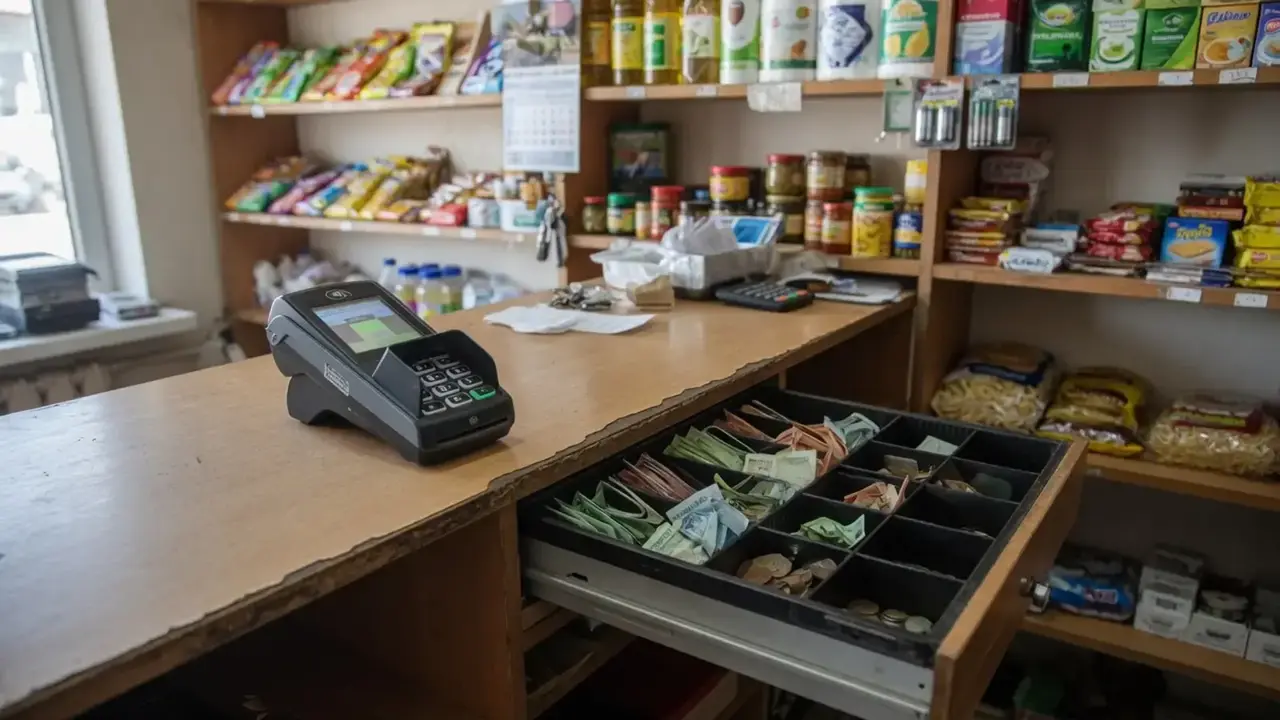
A shop can be profitable on paper and still feel broke at 4 p.m. Sales landed in a mobile-money merchant wallet. The wholesaler wants cash. Customers keep handing over notes too large for the till. None of that is a mystery of accounting. It is liquidity pressure: value exists, but not in the form and place the next obligation requires.
Merchants already use licensed banks, cards, and mobile money where those services make sense. They do not need a marketplace that pretends to replace their bank. They need fewer dead ends when form-of-value mismatches stop trade.
Pressure points through a trading day
- Opening float. Enough cash for change; enough e-value if they cash customers in.
- Midday mix shift. A run of digital sales empties the ability to break notes.
- Supplier windows. Deliveries often demand specific methods and tight timing.
- Closing risk. Holding large cash overnight; or holding digital value when tomorrow’s costs are cash-heavy.
Each pressure point is ordinary. Stacked together, they produce the familiar pattern of turning away customers or delaying suppliers—not because demand failed, but because conversion failed.
What “help” looks like without custody myths
Useful help is specific: a way to find someone who can complete a conversion through licensed channels, with clear expectations on amount, method, and meeting logistics. Useless help is vague: “instant liquidity” language that implies a platform balance the merchant does not control, or guarantees the marketplace is not licensed to make.
CaQeh positions itself as a peer-to-peer liquidity marketplace—software that connects people seeking liquidity with people able to provide it. Payments go through existing licensed rails. CaQeh does not take custody of customer funds. Merchants should still maintain their relationships with banks and mobile-money providers for settlement, statements, and disputes.
Operational habits that reduce thrash
- Track the payment mix by hour, not only by day—shortages hide in the average.
- Set denomination rules at the counter (when to refuse large notes, when to request exact digital amounts).
- Separate supplier payment planning from customer acceptance policy.
- Document who on the team can authorise conversions and meet-ups safely.
These habits are not glamorous. They prevent treating every shortage as a crisis that requires a new app.
Practical takeaways
- Merchant pain is often form-of-value mismatch, not absolute insolvency.
- Keep settlement and custody with licensed providers; use marketplaces for discovery if needed.
- Measure lost sales from change and float problems—they are real revenue leaks.
- Reject product claims that blur software matching with banking services.
Conclusion
Everyday trade runs on mixed rails. Liquidity pressure is the cost of that mix when conversion is slow. Matching tools can reduce search time; they do not replace working capital discipline or licensed accounts. To see how CaQeh describes non-custodial matching for real-world payment coordination, start with the product overview and FAQ.