
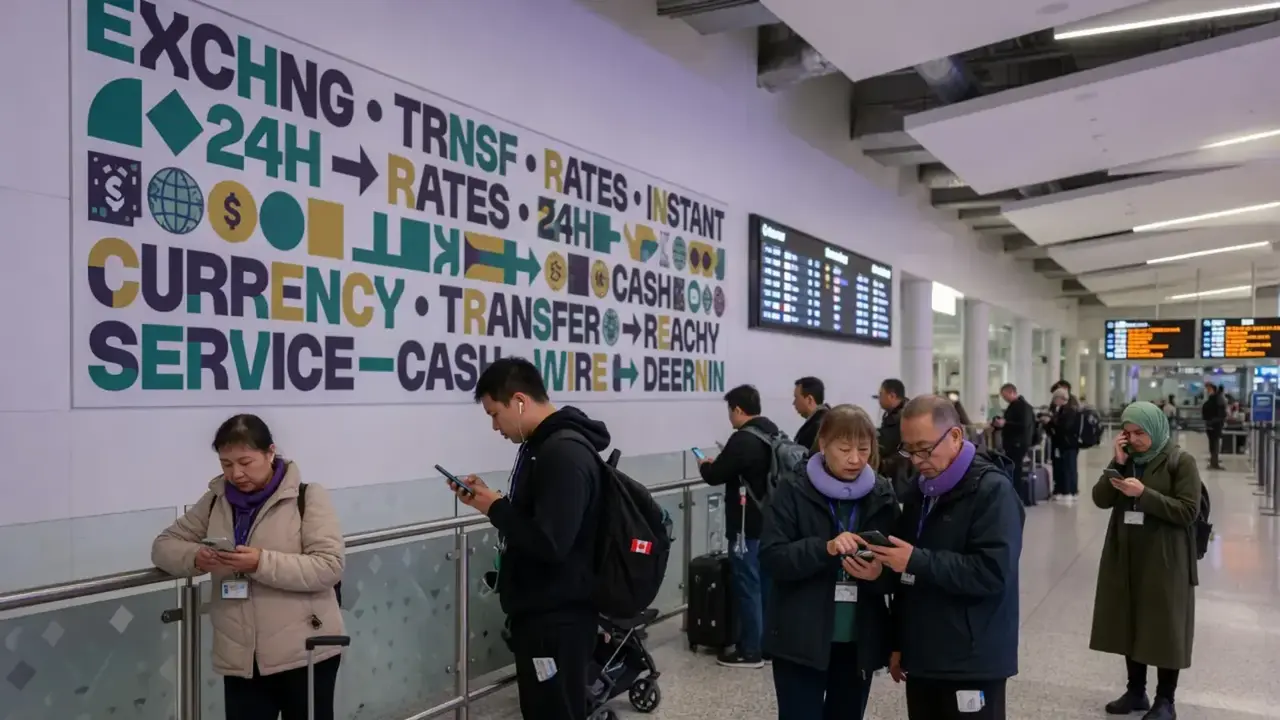
Payment corridor maps are tidy. They draw arrows between countries, label average prices, and imply that once a route exists, users experience a single product. Real transfers are messier: different cut-off times, different ID checks, different failure codes, and family group chats full of screenshots asking whether money “has arrived” yet.
This piece is general education about friction patterns. It is not legal, tax, or financial advice. Licensing, foreign-exchange controls, and consumer rights differ by jurisdiction and change over time. Always verify requirements with authoritative sources and licensed providers for your corridor.
Friction that survives “a competitive fee”
FX opacity
Users often compare headline fees and ignore the rate. The effective cost sits in the spread and in whether the rate locks at send, at convert, or at payout. Educational comparisons should separate fee from FX—and avoid inventing average savings claims without transparent methodology.
Compliance and timing
Screening and enhanced checks exist for legitimate financial-crime prevention. They also create delay that corridor dashboards may average away. A transfer that “usually” completes in minutes can still sit for hours when a name match needs review. That is not always a vendor bug; sometimes it is the system working as designed under regulated obligations.
Rail mismatch
Sender pays from a bank app; receiver expects mobile money. Or the reverse. Interoperability projects reduce this pain where live, but many corridors still require an intermediate cash-out or a second hop. Each hop reintroduces fees and failure points.
Social settlement
Many “cross-border” needs are actually local completion problems: a relative abroad funded a wallet, but the person on the ground needs cash today. The international leg may already be done. The remaining work is local liquidity—closer to peer-to-peer matching than to a new remittance product.
What technology marketplaces can and cannot claim
A technology marketplace can help people coordinate local legs: finding someone who can complete a cash or digital handoff through licensed channels they already use. It cannot, by branding alone, become a licensed remittance institution. CaQeh’s model is peer-to-peer liquidity matching without custody of customer funds. It is not a bank, deposit-taker, or remittance licensee by virtue of being a marketplace. Any company that implies otherwise without published licences is asking users to confuse software with regulated financial services.
If you evaluate tools for local completion after a cross-border credit, keep the questions boring and sharp: Who holds funds? Who is the payment service provider of record? What dispute path exists if a transfer fails? For CaQeh’s answers in its own words, read About and FAQ.
Practical takeaways
- Price both fee and FX; ask when the rate locks.
- Plan for compliance delay as a normal tail risk, not a rare glitch.
- Separate the international funding leg from the local cash or wallet completion leg.
- Demand explicit custody and licensing statements from any platform you use.
Conclusion
Corridor maps are starting points, not user experience. Friction lives in FX, compliance timing, rail mismatch, and local liquidity after funds “arrive.” Solve each layer with the right kind of institution—and use marketplaces only for the coordination problems they are built to handle. When local matching is the missing piece, explore CaQeh’s peer-to-peer liquidity approach without confusing it for a remittance bank.